Thursday, 7 May 2020

Art Abandonment


There is a movement of people across the world creating art and placing it for strangers to find. 

The Art Abandonment Group can be found on social media and you can scroll through the pieces of art that people had lovingly created to pass on to strangers.

The artist makes a decision to leave one an artwork in a public place, for someone to find and keep or pass it on.

The group was founded by artist Michael deMeng, artist and owner of Michael deMeng Art.  He says the inspiration for the group came from a sketch on a napkin. He decided to leave it on the table for the next person to find wondering what would become of the artwork. Would it be liked? Would it be thrown away?

The response to the posting of his first abandonment was so popular that they started the Facebook group to inspire others. Within a week there were more than 800 members and today they have nearly 30,000 members worldwide.

Traditional pieces of art like painting and drawings are made and left outside, but members also abandon jewellery, pottery, garden and home décor, books and zines, and even rocks! Whole families are getting involved and people are abandoning their art in shops, on the beach, in parks and anywhere there might be a flow of pedestrian traffic.

Next time you’re feeling overwhelmed by the sad and tragic news of the world, visit the Art Abandonment Facebook page and if you want to join in, you’ll find all the details there as well.

This is a clever way to make people think about art and anyone from adult to child can participate while the pieces vary in theme and size.

Here at MoonInk it is our mission to take the poetry out of the page and into the world and we have started a project where we are writing Tanka and Haiku poems onto stone. We are leaving them on the seafront and in town for people to read and take home if they like a particular poem.

Visit us a www.moonink.co.uk for more information, sign up for the free Poem of the Month and follow us on social media for more poems.  


Instagram moonink5
Facebook 
fb@moonink 
Twitter 
@Moonink5
Pinterest 
MoonInk 


Monday, 6 April 2020

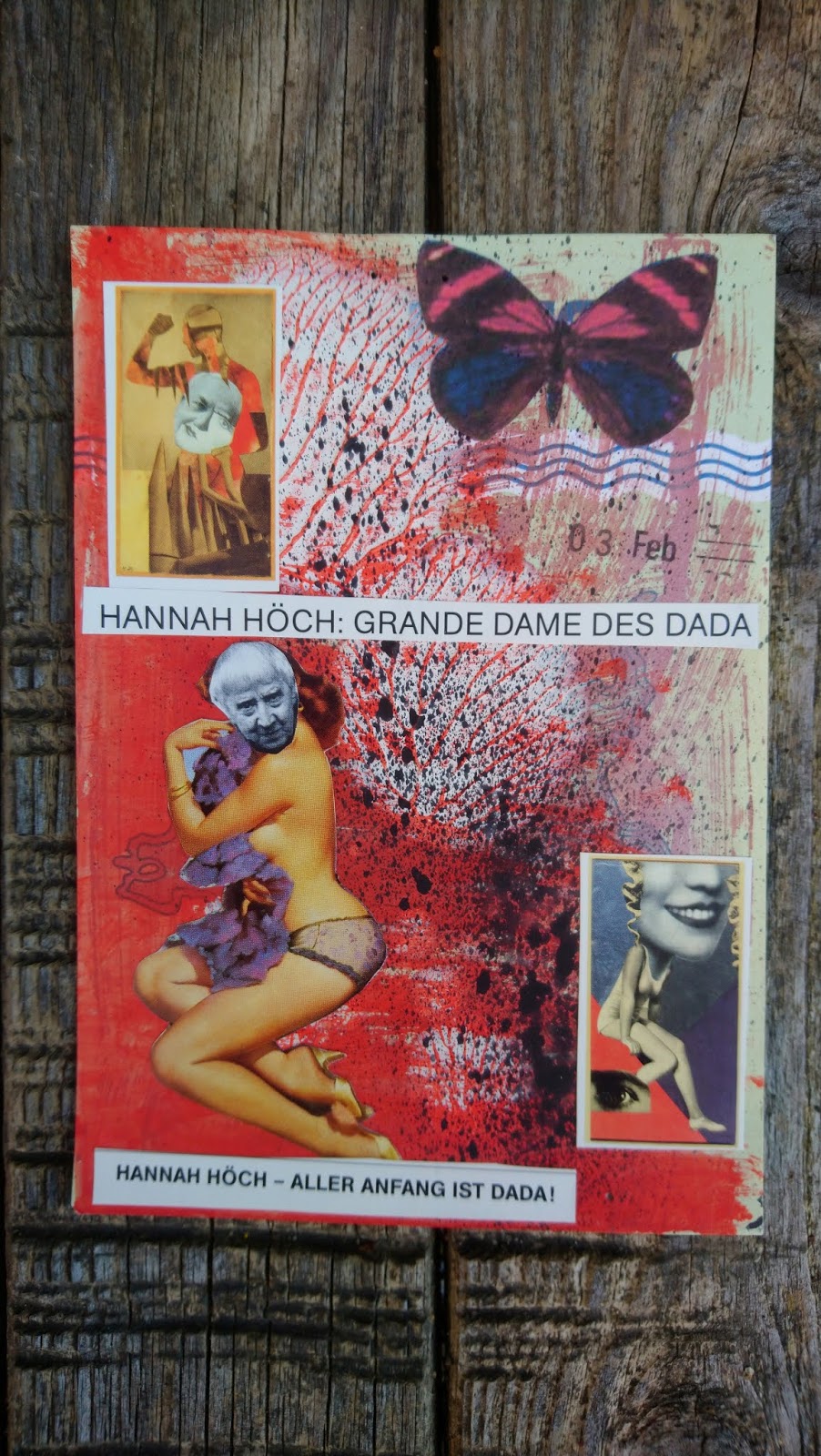
What is Mail Art?


Mail art began in the 1960s when artists sent postcards inscribed with poems or drawings through the post rather than exhibiting or selling them through conventional commercial channels.

Media commonly used in mail art include postcards, paper, a collage of found or recycled images and objects, rubber stamps, and paint, but can also include music, sound art, poetry, or anything that can be put in an envelope and sent via post. Mail art is considered art once it has been sent.

Mail artists appreciate interconnection with other artists and rely on their network as the primary way of sharing their work, rather than being dependent on securing exhibition space.

Radical Pop and conceptual artist Ray Johnson kicked things off. He began to ship packages from his home in New York including collages, drawings, annotated newspaper clippings, as well as found images and objects from snake skins to plastic forks. These were sent to art-world celebrities, friends, and strangers alike.

Artists have continued to keep pace with evolving communication technologies, even as snail mail has been replaced by swifter electronic messaging. Mail art these days tends to be a hybrid of the analog and the digital.

When Frank Warren launched Post Secret in 2005, it became an almost immediate sensation. Part crowd-sourcing phenomenon, part psychological experiment, the website encouraged visitors to write or illustrate their secrets on a postcard, then send them to a single address. Today, Warren publishes 10 anonymous secrets to the blog each week, still attracting confessions from every corner of the globe.

Similarly, art galleries and exhibition spaces have also used a blend of old-fashioned mail and social media to grow their networks and bring creatives together.

See below for some examples of Mail Art received by Lee Jackson who posts little books of Tanka poems to his network. If you would like to be included in the mailing list send your postal address to Lee at info@moonink.co.uk

Please contact MoonInk at info@moonink.co.uk if you have any questions.

Follow us on Social Media:
Instagram moonink5
Facebook 
fb@moonink 
Twitter 
@Moonink5
Pinterest 
MoonInk 


Tuesday, 3 March 2020

What are Haiga?


Haiga is a traditional Japanese form of poetry and art which unites a poem with a brush and ink Sumi painting although the evolution of Haiga has grown to include digital images.

The poems used in Haiga include Haiku, Senryu and Tanka. 
  •     Haiku is a form of poetry that focuses on a brief moment in time, and a sense of sudden illumination or enlightenment
  •      Senryu is usually written in the present tense and references some aspect of human nature or emotions
  •       Tanka poems are written about nature, seasons, love, sadness and other strong emotions
Susumi Takiguchi, founder of the World Haiku Club, tells us that simplicity and irony are typical traits of the traditional Haiga. He writes, "Haiga is unromantic, down to earth, unpretentious and humorous, dealing with unremarkable, day-to-day subjects and objects." "Hai" means comic and "Ga" means painting.

While the haiku and the painting in a Haiga share the same space, they are meant to complement one another.

The third element of Haiga is the calligraphy which determines the look of the poem on the page and communicates its essence.

Haiga was traditionally produced in a variety of formats, including hanging scrolls, hand scrolls, folding screens, and fans. Today it is produced on handmade paper and modern Haiga allows the use of photography, as well as digital images.

Stylistically, Haiga vary widely based on the preferences and training of the individual painter. Some were reproduced as woodblock prints. The subjects painted likewise vary widely, but are generally elements mentioned in the calligraphy, or poetic images which add meaning or depth to that expressed by the poem.

The moon is a common subject in these poems and paintings while other subjects, ranging from depictions of Mount Fuji to rooftops, are frequently represented with a minimum of brushstrokes, thus evoking elegance and beauty in simplicity.


See below for some MoonInk Haiga and visit www.moonink.co.uk to see some more examples of Western Tanka poetry, the 5 line version of a Haiku. Subscribe to the newsletter to get the free Poem of the Month.

Please contact MoonInk on info@moonink.co.uk if you have any questions.

Follow us on Social Media:


Instagram moonink5
Facebook 
fb@moonink 
Twitter 
@Moonink5
Pinterest 
MoonInk 


Tuesday, 4 February 2020

Jack Kerouac - Master of Haiku


Did you know that Jack Kerouac, the American author and poet was a master of Haiku, the Japanese short form poem and was highly influential in popularising Haiku in America and the West?

Jack Kerouac is best known as one of the Beat Poets of the 50’s and most people tend to think of him as the author of ''On the Road”.

Kerouac was a drifter who along with his friends Allan Ginsberg, William Burroughs, Neal Cassady and others, founded the Beat literary movement, a group of writers and artists who burst on the American scene in San Francisco in 1955.

They were rebels who rejected the materialism of the post-World War II era in the West, and favoured dropping out of society to experience authentic life through road trips, jazz clubs and altered consciousness.

Kerouac discovered Haiku when he began studying Buddhism and he reformed the way that Haiku was thought about. He rejected the strict, traditional 17 syllable Japanese form, but kept the three short line form. He liked the idea that something so short could say so much.

"I propose that the 'Western Haiku' simply say a lot in three short lines in any Western language. Above all, a Haiku must be very simple and free of all poetic trickery and make a little picture . . ."

It was his opinion that a Western Haiku need not concern itself with the seventeen syllables since Western languages cannot adapt themselves to the fluid syllabic Japanese.

In 1956, he spent sixty-three days on Desolation Peak, meditating, reading, and thinking about Buddhism. In his collected Haiku, 72 were found from that experience.

Here are some examples of Kerouac’s work:

Crossing the football field,
coming home from work
The lonely businessman

In my medicine cabinet
the winter fly
Has died of old age

Wash hung out
by moonlight
Friday night in May

Empty baseball field
A robin,
Hops along the bench

Visit www.moonink.co.uk to see some examples of Western Tanka poetry, the 5 line version of a Haiku. Subscribe to the newsletter to get the free Poem of the Month.

Please contact MoonInk on info@moonink.co.uk if you have any questions.

Follow us on Social Media:

Instagram moonink5
Facebook 
fb@moonink 
Twitter 
@Moonink5
Pinterest 
MoonInk 


Wednesday, 22 January 2020

MoonInk Tanka High School Anthology Competition 2020


MoonInk are launching a Tanka poetry competition for High Schools in London and the South East. If your school is interested in entering contact Lee and Tana Jackson at info@moonink.co.uk for a free copy of the Tanka Poetry Workshop Pack which provides everything required to run a workshop.


Schools will be able to use the workshop material to facilitate group activities where students will write their own Tanka poems. Ten poems from each school can be entered into the MoonInk Tanka High School Anthology competition. The deadline for submissions is the 30 June 2020.

One poem will be chosen from each school taking part to be published on the online MoonInk Tanka High School Anthology in November 2020. The winning poems will also be published on YouTube.

MoonInk will be contacting High Schools in London and the South East throughout March to invite them to take part.

Tanka is a Japanese style of poetry dating back to the 5th Century and the poems are written about nature, the seasons, love, sadness and other strong emotions, using strong imagery with a focus on the 5 senses.

Mindfulness can be described as a mental state achieved by focusing one's awareness on the present moment, while calmly acknowledging and accepting one's feelings, thoughts, and bodily sensations.

Reading and writing poetry can help people become more mindful and can relieve stress, trauma, feeling down, and other well-being challenges.

The MoonInk mission is to bring poetry to life by taking the verse out of the book and into the world to gain a wider audience for the poetry in our lives and we are sharing social responsibility by developing the mindfulness and well-being of the people living in our communities.

For more information about MoonInk or Tanka Poetry visit www.moonink.co.uk or the MoonInk Blog Poetry Pages


Contact MoonInk at info@moonink.co.uk

Instagram – moonink5
Facebook – moonink
Twitter – Moonink5

Thursday, 2 January 2020

What exactly is Mindfulness?


Mindfulness can be described as a mental state achieved by focusing one's awareness on the present moment, while calmly acknowledging and accepting one's feelings, thoughts, and bodily sensations.

Mindfulness also involves acceptance, meaning that we pay attention to our thoughts and feelings without judging them without believing, for instance, that there's a “right” or “wrong” way to think or feel.

Reading and writing poetry can help people become more mindful and can relieve stress, trauma, feeling down, and other well-being challenges.

It can be easy to rush through life without stopping to notice much.

Paying more attention to your thoughts and feelings and to the world around you can improve your mental wellbeing. Some people call this awareness "mindfulness".

Professor Mark Williams says that mindfulness means knowing directly what is going on inside and outside ourselves, moment by moment. He says, it's easy to stop noticing the world around us. It's also easy to lose touch with the way our bodies are feeling and to end up living 'in our heads' – caught up in our thoughts without stopping to notice how those thoughts are driving our emotions and behaviour.

It's about allowing ourselves to see the present moment clearly. When we do that, it can positively change the way we see ourselves and our lives.

When we become more aware of the present moment, we begin to experience afresh things that we have been taking for granted.

Most of us have issues that we find hard to let go and mindfulness can help us deal with them more productively. We can ask: 'Is trying to solve this by brooding about it helpful, or am I just getting caught up in my thoughts?'

Awareness of this kind also helps us notice signs of stress or anxiety earlier and helps us deal with them better.

Reminding yourself to take notice of your thoughts, feelings, body sensations and the world around you is the first step to mindfulness.

Evidence suggests there are 5 steps people can take to improve their mental health and wellbeing.

1.      Connecting with other people
2.      Being physically active
3.      Learning new skills
4.      Giving to others
5.      Paying attention to the present moment (mindfulness)

Visit www.moonink.co.uk to see some examples of Tanka poetry.

Tanka poems are written to capture a single moment or emotion and are written about nature, the seasons, love, sadness and other strong emotions, using strong imagery with a focus on the 5 senses. Imagery is key and the words paint a picture in our minds.

Email us at info@moonink.co.uk for more information.


Sunday, 1 December 2019

Akiko Yosano - Japanese author, poet, feminist, pacifist, and social reformer


Akiko Yosano (1878 - 1942) was the penname of Japanese author, poet, feminist, pacifist, and social reformer. Her real name was Yosano Shiyo and she is one of the most famous, and most controversial, post-classical female poets in Japan.

In 1901, Akiko moved to Tokyo to be with Yosano Hiroshi, a writer and editor whom she married later that year, shortly after the publication of her first book of poems Tangled Hair which contained 400 poems.

Tangled Hair caused a sensation among her contemporaries for its freshness of theme and style, and its direct expressions of passion in an uninhibited, sensual language and was mostly denounced by literary critics. Despite this critical reaction, it was widely read and became a beacon for freethinkers of her time. Her first book brought a passionate individualism to traditional Tanka poetry, unlike any other work of the late Meiji period.

Traditional Japanese values expect women to be gentle and modest and the role of a Japanese woman was focused on procreation and raising children. Tangled Hair created a new revolutionary image of womanhood, as lively, free, sexual and assertive and a door was opened for Japanese women to imagine new representations of sexuality and the female body.

Her work was immense, she wrote more than 17,000 Tanka and published 75 books, including translations of classical literature. She also had 13 children, 11 of whom survived into adulthood.

An early feminist and outspoken critic of nationalism and government policy, Akiko was also an educational reformer and established the Bunka Gakuin, a women’s trade school, in 1921.

Akiko died of a stroke in 1942 at the age of 63. After the end of the Pacific War her works were largely forgotten by critics and the general public but in recent years, her romantic, sensual style has come back into popularity and she has an ever-increasing following.

Three Tanka poems by Yosano Akiko

Her hair at twenty
Flowing long and black
Through the teeth of her comb
Oh beautiful spring
Extravagant spring!

Translated by Roger Pulvers


My black hair
My thick thick black hair
My wild hair
Its thousand strands my heart
Dishevelled, torn apart.

Translated by  Roger Pulvers


My shiny black hair
fallen into disarray,
a thousand tangles
like a thousand tangled thoughts
about my love for you.

Translated by Sam Hamill & Keiko Matsui Gibson

Visit www.moonink.co.uk to see some Tanka poems printed onto unique gift ideas. Contact us at info@moonink.co.uk if you have any questions. 


Follow us on: Facebook  Instagram  Pinterest   Twitter